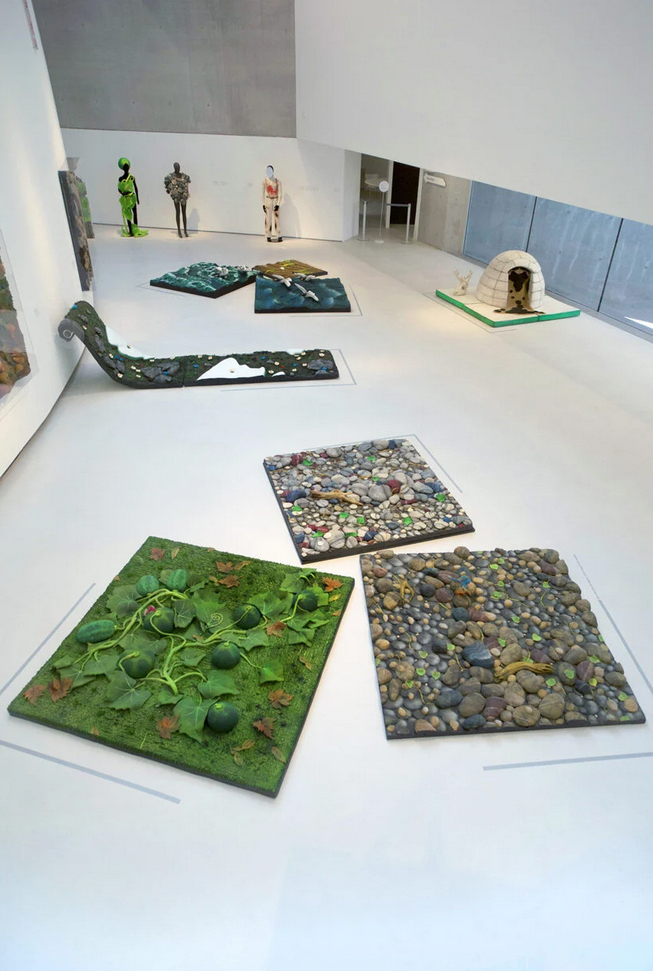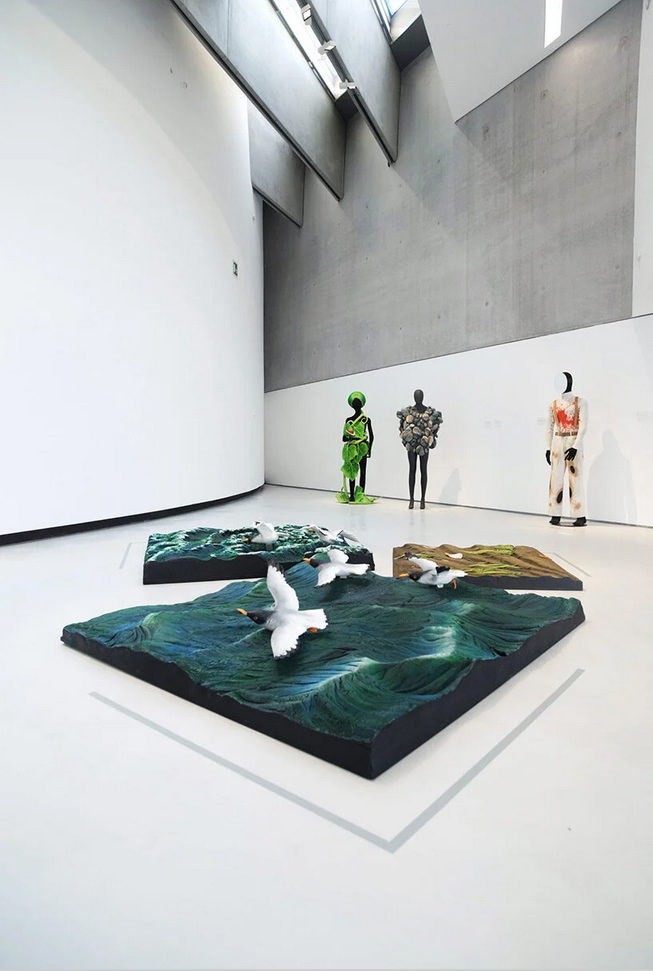
Designboom_ Piero Gilardi, Italian Arte Povera artist best known for his ‘Nature Carpets,’ has passed away at the age of 80. Born in Turin in 1942, Gilardi created his most famous works in the mid-1960s, when he began producing realistic polyethylene landscape rugs that ranged from seashores to agricultural fields and forests. From 1968, the artist stopped his regular art production to devote himself to the artistic movement of Arte Povera. He spent the last years of his life working in Turin.
Piero Gilardi’s most famous works are his floor sculptures (‘carpets’) which recreate natural landscapes using polyurethane foam enriched with vinyl resin and rubber latex. Although some earlier works are protected by Plexiglas, Gilardi wanted people to walk or even sleep on these carpets as they would on the terrain they represent.
In 1963, Piero Gilardi realized his first private exhibit Machines for the Future, and two years later, he created his first works in polyurethane foam and exhibited them in Paris, Brussels, Cologne, Hamburg, Amsterdam, and New York. As mentioned above, Gilardi stopped producing regular artworks in 1968 to get more active in the Arte Povera, Land Art, and Antiform Art movements of the late 60s. He participated in the organization of the first two international exhibitions of the new movements at the Stedelijk Museum in Amsterdam and at the Bern Kunsthalle. Mainly working as a critic and political organizer, he organized several experiences of collective creativity in different locations, including Nicaragua, the Indian reservations in the United States, and various African countries.
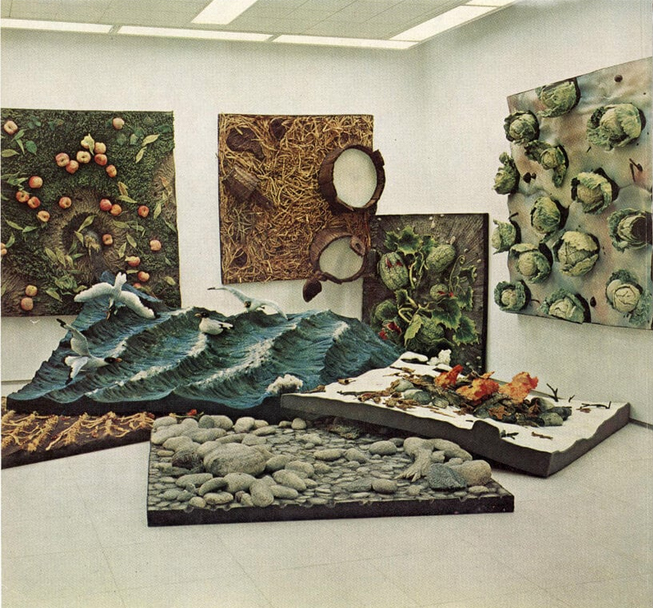
In 1981, Piero Gilardi resumed his activity in the art world, by exhibiting numerous installations accompanied by creative public workshops. In the 1990s, the pioneer of Arte Povera developed a series of interactive multimedia installations that received considerable international attention. He also published two books with theoretical reflections on his various forms of research: Dall’arte alla vita, dalla vita all’arte (From art to life, from life to art), La Salamandra, Milano 1981 and Not for Sale, Mazzotta, Milano 2000 and Les Presses du reel, Dijon 2003.
In 2003, he developed the Parco Arte Vivente (Park of Living Art) in Turin, which features earthworks by artists such as Dominique Gonzalez-Foerster and Lara Almarcegui and contains a compendium of all Gilardi’s experiences related to the relationship between nature and culture.