
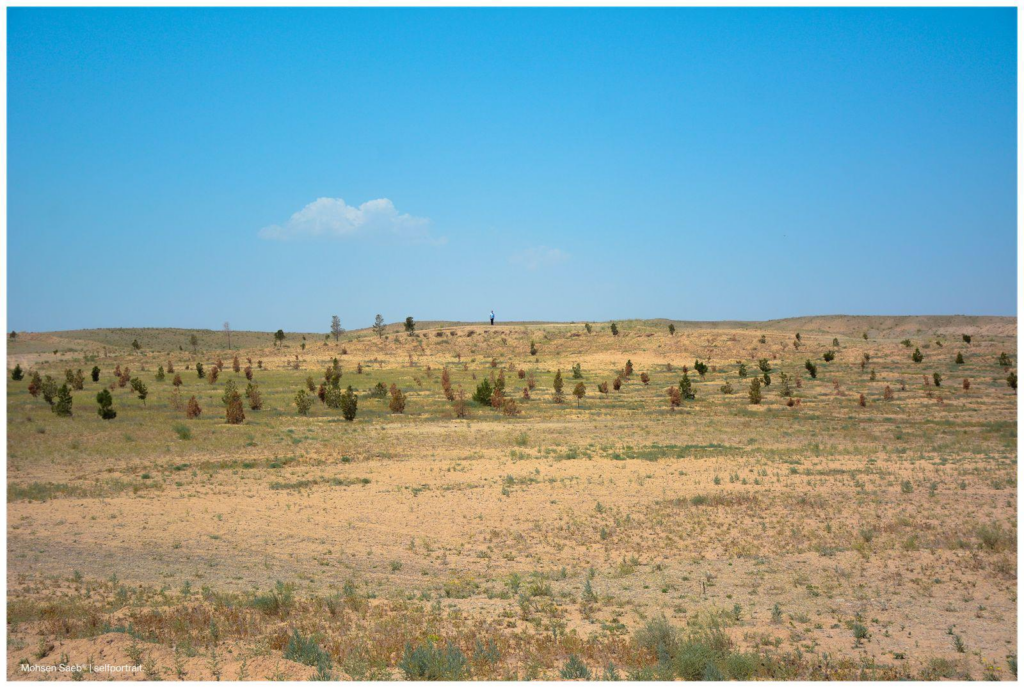
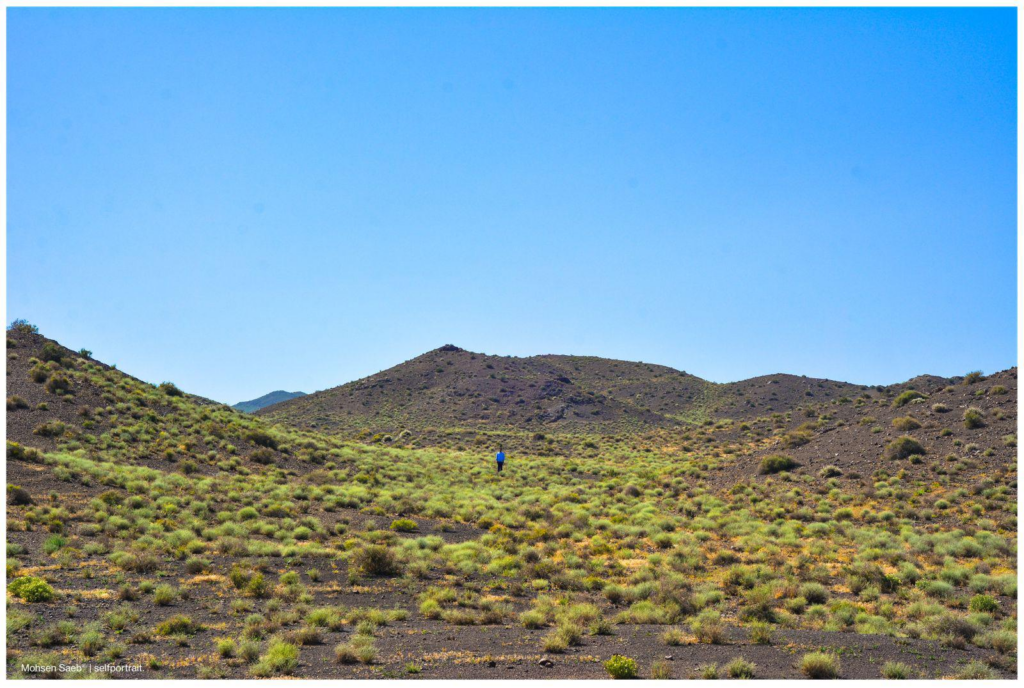
Contemporary people no longer live in one fixed place. They live inside distances. Mohsen Saeb’s Self-Portrait begins from this condition. The series starts at the moment when the body loses its central position in the image, and the landscape slowly takes its place. In these works, self-portraiture does not function as a direct presentation of identity or facial recognition. Saeb places his body deep inside wide and empty Iranian landscapes. His figure appears so small and distant that the line between presence and disappearance becomes unclear. This visual decision connects closely to his idea of unstable belonging and unstable identity. He uses distance as the main language of the work. Through this distance, he suggests that identity changes through space, isolation, movement, and position. The series moves beyond personal portraiture and opens a wider reflection on the emotional condition of contemporary life. The human figure appears suspended between existing and fading away.
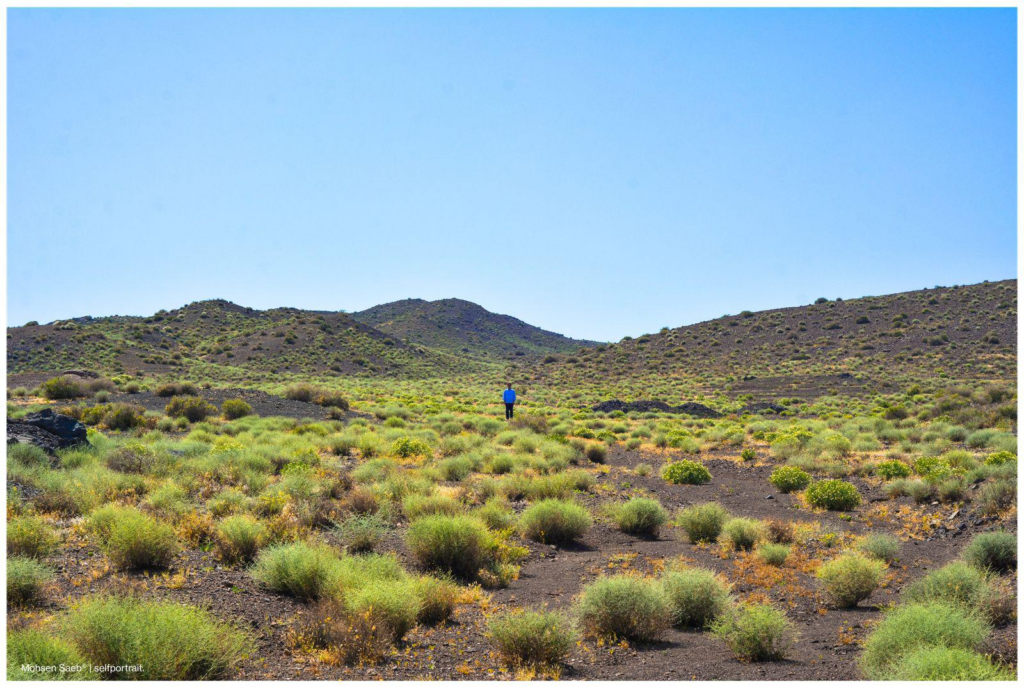
The phenomenologist Maurice Merleau-Ponty described the body as our way of being in the world. Saeb’s photographs strongly reflect this idea. The body does not work as an object for display in these images. The body becomes a tool for experiencing space. In many photographs, the horizon occupies most of the frame and dominates the composition. The landscape carries more visual weight than the human figure. In one image, Saeb’s small body almost disappears inside dry hills and scattered plants. In another image, the huge sky and empty land reduce the body to a fragile point in space. This treatment of scale changes the traditional idea of portraiture. Classical portraiture often tried to stabilise identity and highlight individuality. Saeb follows a different direction. He reduces the body and reveals uncertainty, fragility, and emotional distance.
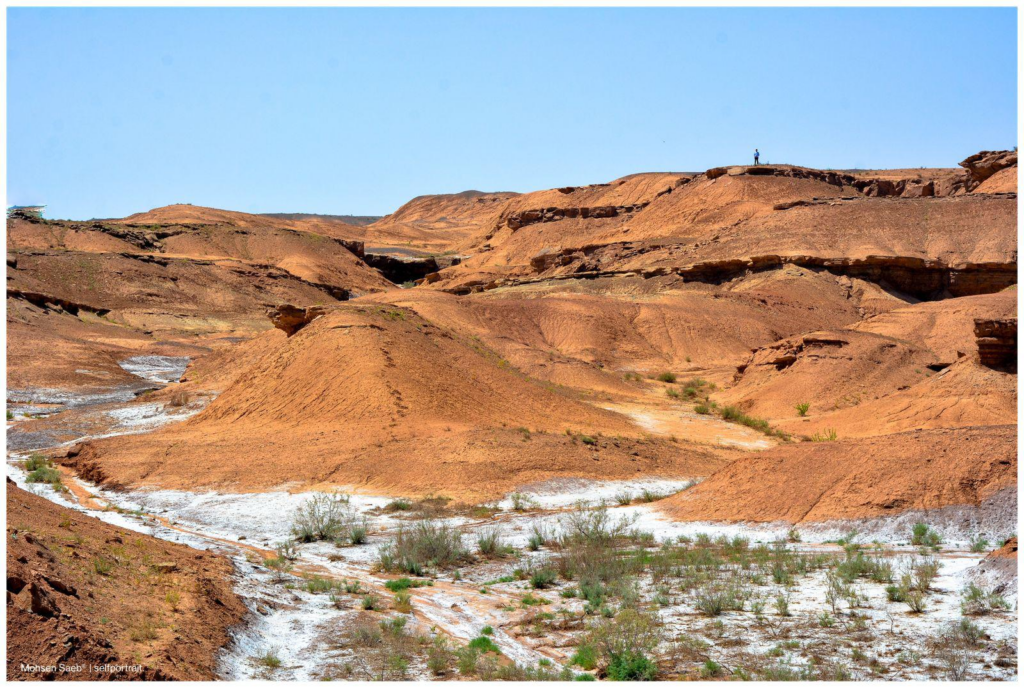
Migration exists inside this series, although Saeb does not present it through direct storytelling. This restraint gives strength to the work. He avoids dramatic images of loss or nostalgia. The landscapes feel poetic, yet they also feel dry, silent, and emotionally exposed. These places resemble psychological states as much as physical locations. Saeb speaks about belonging as something fluid and unstable. This idea gives the images a deeper meaning. His body never fully settles into the landscape. His presence feels temporary and vulnerable. Because of this, the photographs create the feeling of existing between arrival and departure. Migration appears here as a lived emotional condition that reshapes the relationship between body, space, and the feeling of being present in the world.
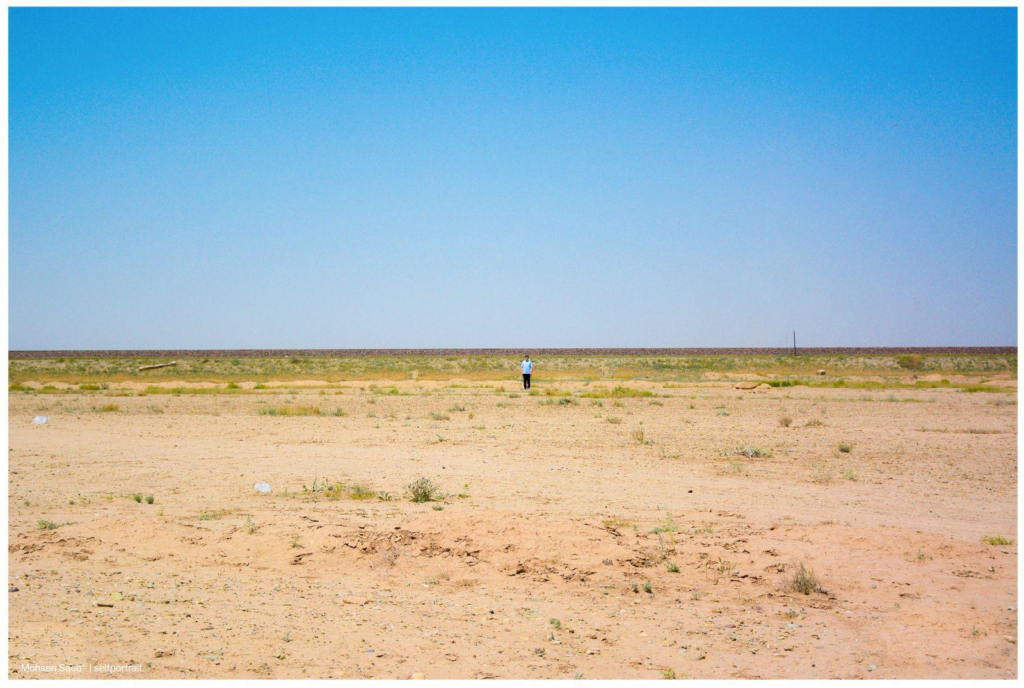
Ultimately, the main power of Mohsen Saeb’s Self-Portraits lies in their silence. These images do not force meaning onto the viewer. Saeb creates space for reflection through emptiness, distance, and visual quietness. Roads disappear from the frame, although the feeling of travel remains visible throughout the series. The face disappears from the images, although human presence still fills the landscapes. This tension between visibility and fading away gives the work its emotional power. The series moves beyond personal autobiography and becomes a meditation on contemporary belonging. Saeb presents belonging as something temporary, fragile, and constantly changing.
Written by Dr Fatemeh Abdollahzadeh