
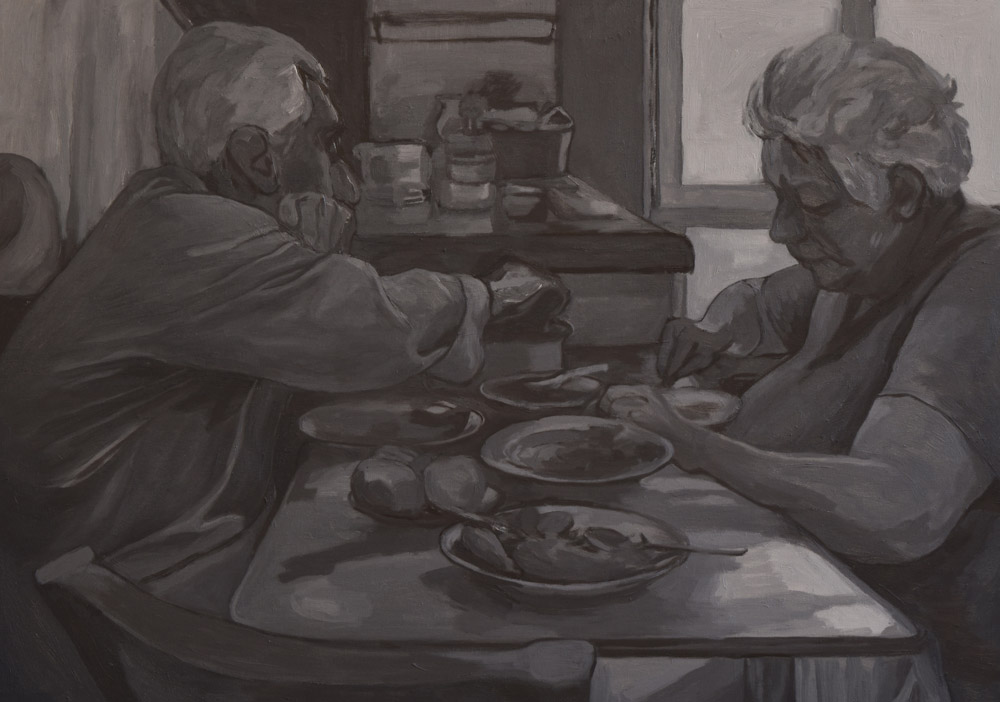
A home is where identity is lived before it is ever defined. In Duet, Nazanin Ghahramani turns the domestic interior into a site of observation, where two people shape their identities through shared routines, habits and the quiet distances that emerge between them. The series can be read through Henri Lefebvre’s concept of the “rhythms of everyday life”, which examines how repeated patterns of behaviour organise our experience of time and space. In Ghahramani’s drawings, sitting, sleeping, eating, waiting and occupying familiar positions within the home become traces of these rhythms. Her parents emerge as two individuals whose daily behaviours form a small social structure, revealing how identity develops through coexistence, repetition and habit. By concentrating her study on two people, Ghahramani creates a focused framework for examining the wider question of how identity takes shape within everyday life.
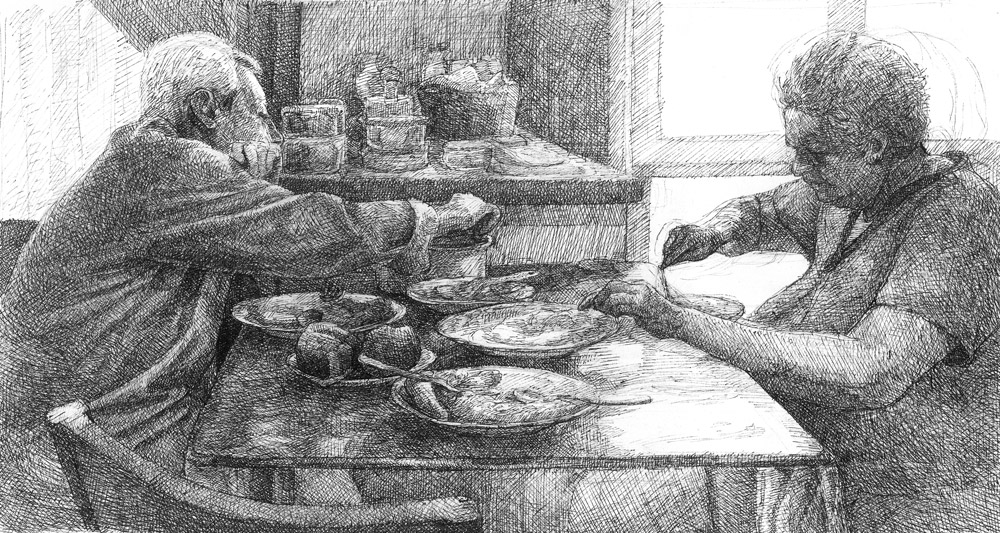
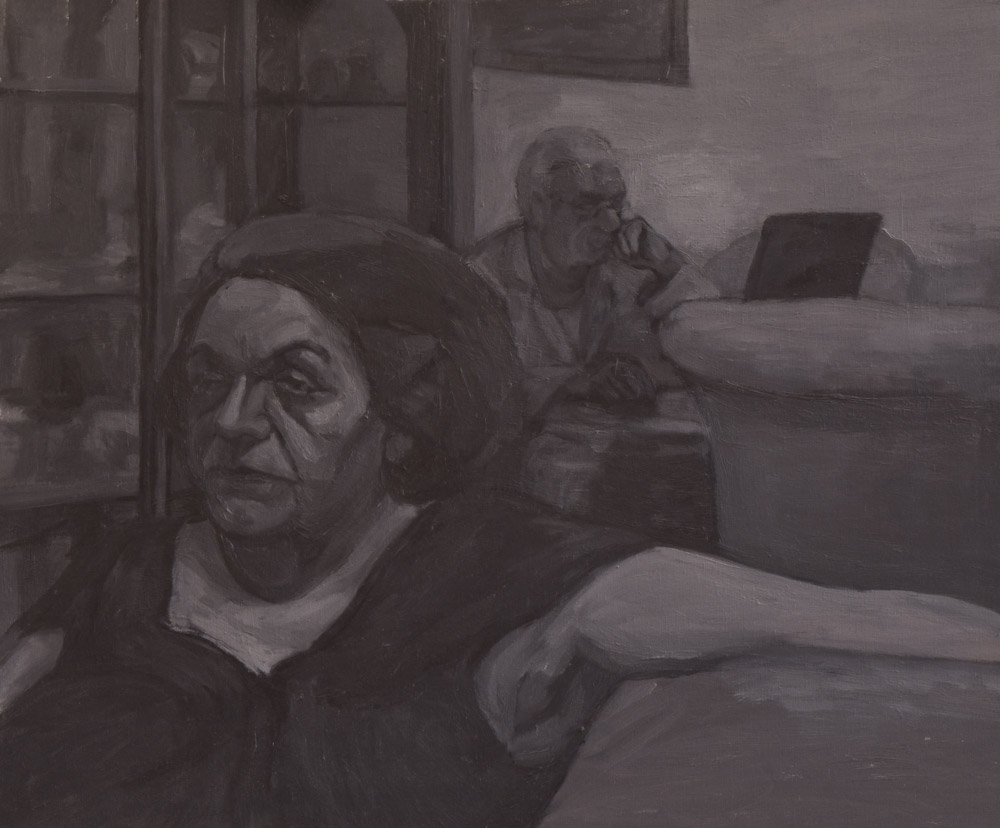
The strength of Duet lies in the precision of its observation. Many of the works originate in real situations and repeated behaviours observed within the artist’s family, while composition, gesture and framing introduce her own interpretive position. A bag resting beside a sofa, freshly washed clothes, medication on a table and framed photographs become significant visual details, carrying traces of human presence throughout the domestic environment. These objects record the accumulated history of living in a particular space. The home begins to function as a living archive, continually rewritten through movement, repetition and the ordinary actions of its inhabitants.
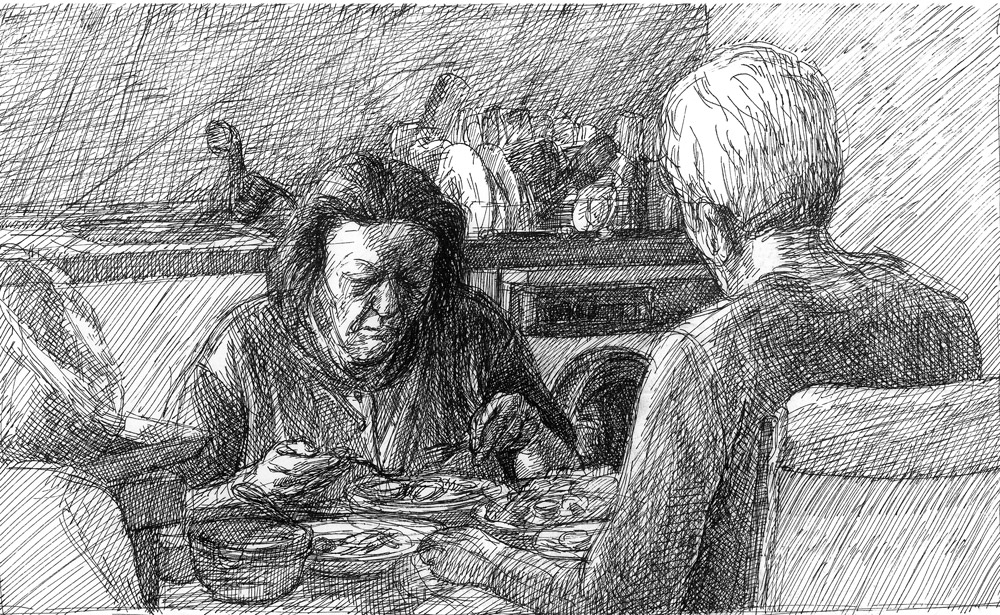
The visual language of the series strengthens this idea. Ghahramani uses metal-point drawings and soft grey lines to bring people, objects and the home into the same visual space. The loose quality of the drawings keeps the figures connected to their surroundings and gives the scenes a sense of incompleteness, as if the people and the space are still taking shape. In the oil paintings, the limited use of colour and the weight of the forms create a slower sense of time. These choices make the repetition and quiet pressure of everyday life visible. Through this simple and controlled visual language, Ghahramani turns ordinary domestic scenes into a clear reflection on time, habit and human experience.
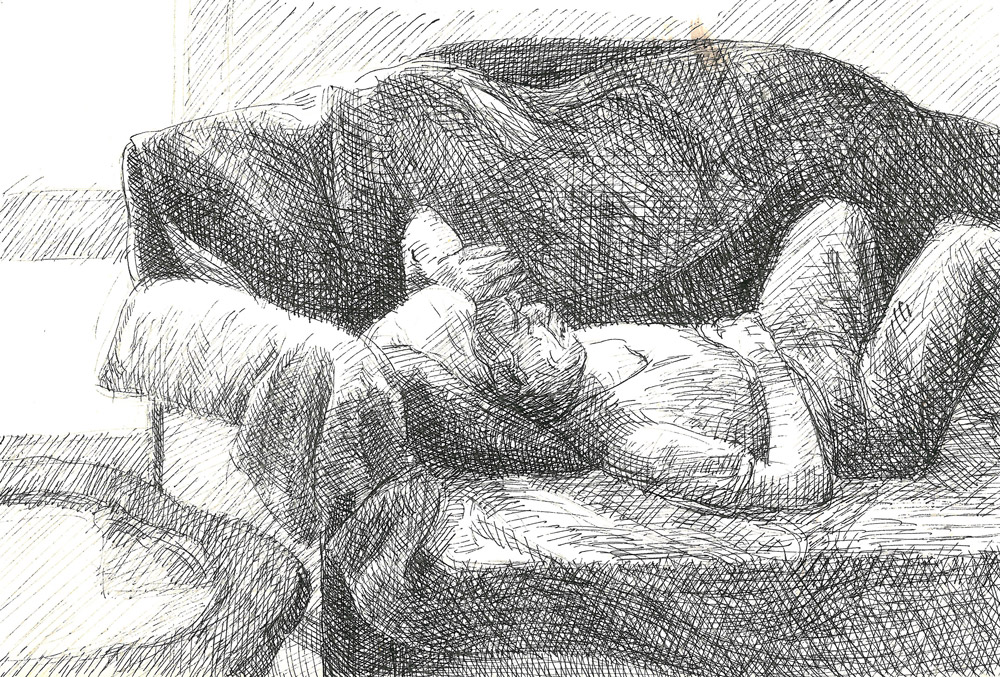
Duet ultimately extends beyond the specific story of one family. Through close attention to an intimate domestic environment, Ghahramani raises a broader question about how human beings construct a sense of self while living alongside others. Her work finds significance in the apparently uneventful moments that make up ordinary life. By giving visual form to these quiet rhythms, Duet turns domestic observation into a thoughtful examination of identity, time and human coexistence.
Written by: Dr. Fatemeh Abdollahzadeh